Heat builds up fast in industrial systems. One minute, everything looks stable, then temperatures start climbing, and the whole process depends on cooling equipment doing its job right.
That is where an air cooled fin fan heat exchanger usually steps in. It handles serious heat without relying on water, which is exactly why so many plants still trust this setup every day.
A fin fan air cooler heat exchanger may look simple from the outside, but once you understand how it works, you start seeing why it stays so common in heavy process operations.
The basic idea behind a fin fan heat exchanger
A fin fan unit is built to remove heat from a process fluid by using air instead of water.
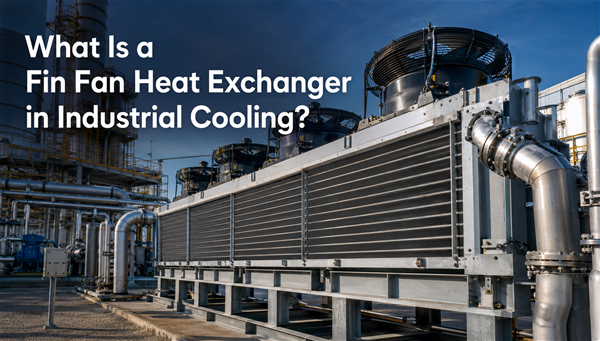
Inside the system, hot fluid moves through tubes. Those tubes are fitted with external fins that increase surface area. Above or below the bundle, fans pull or push air across the finned tubes. As air moves over that surface, heat leaves the fluid and transfers into the surrounding air.
That is the entire working principle behind fin fan heat exchangers. More surface area means better cooling, and forced airflow keeps the process moving.
It is a practical design because it does not depend on cooling towers, large water supplies, or extra treatment systems. In places where water use is expensive or restricted, this setup often becomes the better choice.
Why fins matter so much
The fins are not there for appearance. They are the reason the unit works efficiently.
Without fins, the outside tube surface would be too small to release enough heat quickly. By attaching metal fins around the tubes, the available surface expands dramatically. That gives air more contact area and improves heat transfer.
This is why an air cooled heat exchanger fin fan can cool large volumes of process fluid even when outside temperatures are not ideal.
Tube material, fin spacing, and fin height all affect performance. Some applications need wider spacing because dust builds up easily. Others need tighter fin density for maximum thermal output.
That part depends entirely on where the exchanger is installed and what fluid is moving through it.
Where you usually see these systems
A fin fan air cooler heat exchanger is common anywhere process temperatures need control without relying on water.
You will often find them in:
They are often mounted outdoors because they need unrestricted airflow.
That outdoor setup also makes maintenance easier since large tube bundles and fans need occasional inspection.
Why air cooling makes sense in industry
Water cooling still has its place, but air cooling solves a lot of problems.
Water systems need pumps, piping, chemical treatment, and ongoing monitoring. They also create scaling issues inside the equipment over time.
An air cooled fin fan heat exchanger avoids most of that.
The cooling medium is simply ambient air. No water treatment. No cooling tower drift. No wastewater handling.
That reduces operating complexity, especially in plants where utilities already carry enough load.
It also gives operators more flexibility in dry climates where water conservation matters.
How airflow affects performance
Fan direction matters more than most people think.
Some units push air upward through the tube bundle. Others pull air through from above. Both designs work, but the decision depends on operating goals, maintenance preferences, and climate conditions.
Fan speed also changes performance.
If outside temperatures rise, higher airflow helps maintain heat removal. Some systems use variable speed drives so operators can adjust fan output depending on process demand.
That helps reduce energy waste during cooler weather.
The fan assembly often becomes one of the most important parts of long term reliability, because once airflow drops, cooling performance drops with it.
What operators watch during maintenance
Like any outdoor equipment, dirt eventually becomes a problem.
Dust, pollen, grease, and airborne debris collect on fin surfaces over time, and when that buildup blocks airflow, efficiency drops.
That is why fin fan heat exchanger cleaning becomes part of routine plant maintenance.
Cleaning usually involves:
Aggressive pressure washing can bend fins, so careful cleaning matters.
A damaged fin surface lowers cooling ability even if the tubes themselves still work.
The goal is simple: keep airflow open and heat transfer steady.
Why sizing matters before installation
Not every exchanger fits every process.
Fluid temperature, pressure, viscosity, ambient temperature, and available installation space all affect design.
A unit built for desert conditions may look very different from one installed near a humid coastal plant.
That is why engineering support matters before purchase.
A supplier has to match thermal load with proper fan capacity, tube arrangement, fin type, and bundle size.
That is where experienced industrial suppliers like Kinetic Engineering become valuable because design mistakes at this stage usually cost far more later.
Why do these units stay popular?
Industrial equipment changes all the time, but fin fan systems remain common because they solve a basic problem simply.
They remove heat reliably. They reduce water dependence. They scale well for both medium and large operations.
And they fit into industries where uptime matters every day.
That is why heat transfer products built around air cooling continue to stay relevant even as plants modernize.
The technology is not flashy, but it works.
Choosing the right supplier
Not every exchanger supplier understands real field conditions.
Some only sell equipment by catalog. Others understand how fouling, seasonal temperature swings, and maintenance realities affect performance after installation.
That difference matters.
Kinetic Engineering works with industrial clients that need properly matched heat exchanger systems, not generic equipment dropped into the wrong application.
If your process depends on stable cooling, the right design saves time, energy, and long term operating headaches.
And when a fin fan system is chosen correctly, it usually keeps doing its job quietly for years.
FAQs
How does a fin fan heat exchanger work?
A fin fan heat exchanger works by pushing hot fluid through tubes while large fans move outside air across the finned surface. The fins help spread heat fast, so air can pull it away before the fluid moves back into the process. Simple idea, but in heavy industry, it carries a lot of weight.
How many types of fin fans are there?
Most systems fall into two main types: forced draft and induced draft. Forced draft units push air from below, while induced draft units pull air through from above. That sounds like a small difference, but airflow direction changes maintenance access, fan behavior, and cooling response.
What are the parts of a fin fan exchanger?
A fin fan exchanger is built around finned tubes, headers, fans, motors, supports, and protective guards. Some setups also include louvers for airflow control. Every part has a job, and if one piece underperforms, the whole cooling process starts losing efficiency.
Why does fin fan heat exchanger cleaning matter so much?
Because dirt does not stay harmless for long, dust and oily buildup settle deep between fins, block airflow, and slowly cut cooling capacity. At first, the drop feels minor, then temperatures start creeping up. Regular cleaning keeps the exchanger breathing the way it should.
Fin Fan Heat Exchangers, Air-Cooled Heat Exchangers, Industrial Cooling, Process Cooling, Finned Tubes, Forced Draft, Induced Draft, Heat Exchanger Cleaning, Heat Transfer Products, Fin-X